Go directly to content
Go directly to filters
Go directly to footer
Dr. Abdulmuneem Maarof from Yemen: Strengthening Public Financial Management Through the Shiraka Programme
Publication date 10-11-2026, 15:16
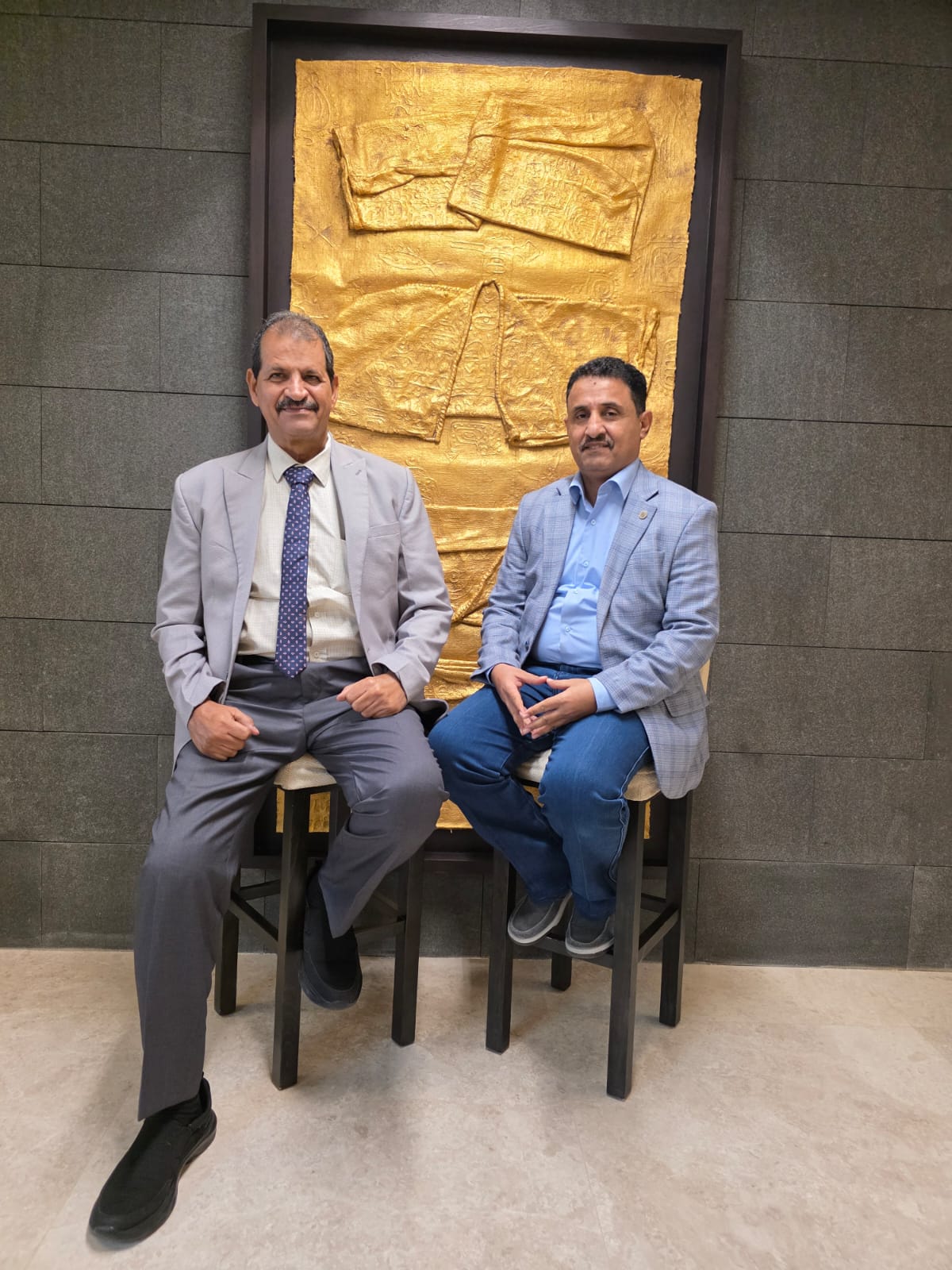
At the National Academy for Finance and Economics, we welcome professionals from around the world to share knowledge and strengthen public financial management (PFM). Through our Shiraka Programme, we bring together experts to learn from the Dutch experience and from each other. One of these professionals is Dr. Abdulmuneem Maarof: General Manager of Public Debt at the Ministry of Finance of the Republic of Yemen. We spoke with Dr. Abdulmuneem Maarof about his experience and the insights he gained.
Dr. Abdulmuneem Maarof plays a key role in Yemen’s financial stability:“I am the General Manager of Public Debt at the Ministry of Finance of the Republic of Yemen. My work focuses on public debt management, debt statistics, coordination with creditors and improving the systems and processes used to support sound fiscal management.”
When the opportunity arose to participate in the Shiraka Programme, Dr. Abdulmuneem Maarof saw it as a chance to deepen his expertise and bring valuable lessons back to Yemen.“I became involved through the Ministry of Finance, after being selected to participate in the Shiraka PFM Programme 2026. I saw it as a valuable opportunity to learn from the Dutch experience and exchange ideas with colleagues from other countries. My main motivation was to strengthen my practical understanding of public financial management and bring useful lessons back to Yemen, particularly in areas related to fiscal management, transparency, control and institutional improvement.”
A practical and insightful experience
“It has been a very positive and practical experience. The programme combined technical sessions with discussions and exchange, which made it easier to understand not only what the Dutch system does, but also why certain approaches are used.”
Dr. Abdulmuneem Maarof found particular value in the sessions on fiscal frameworks, budgetary control, and digital innovation:“I found the sessions on the fiscal and budgetary framework, forecasting, budgetary control, audit, spending reviews and digital innovations particularly valuable. They helped me look at familiar challenges from a broader institutional perspective.”
What stood out most was the Dutch system’s emphasis on transparency and accountability: “What interests me most is the strong connection between rules, institutions, transparency and accountability. The role of Parliament, independent control and audit, and the use of reliable information in decision-making are especially relevant lessons for countries working to strengthen PFM.”
Learning from eachother
The international exchange was a highlight for Dr. Abdulmuneem Maarof. Discussing challenges with peers from different countries revealed both commonalities and unique solutions: “The international exchange showed me that many countries face similar PFM challenges, although the solutions depend on their institutional and economic context. I learned the value of sharing practical experiences and adapting good practices rather than simply copying them.”
The balance between theory and practice was another strength of the programme: “The balance was very good. The theoretical concepts were linked to practical examples from the Dutch system, and the discussions allowed us to compare these approaches with the realities in our own countries.”
Impact and looking ahead
The Shiraka Programme has already had a significant impact Dr. Abdulmuneem Maarofs professional development: “Personally, it has given me new perspectives, greater confidence in discussing PFM issues, and a valuable professional network. I gained a clearer understanding of fiscal frameworks, budgetary control, forecasting, audit, spending reviews and digital approaches to PFM. I also developed a better appreciation of the importance of coordination between different institutions.”
Dr. Abdulmuneem Maarof is eager to apply these insights in Yemen: “I believe I can apply several of the lessons in my work, especially in improving debt information and reporting, strengthening coordination between debt and budget management, and supporting more transparent and evidence-based fiscal decision-making.”
They also emphasize the importance of sharing knowledge with colleagues: “One important message I would add is that international programmes such as Shiraka are most valuable when the knowledge gained is shared with colleagues and translated into practical improvements at home. I hope to contribute to that process within the Ministry of Finance.”